Happy Leopard: A Playful, Festive Font That Stitches With Charm
First Impressions: Whimsy Meets Holiday Heart
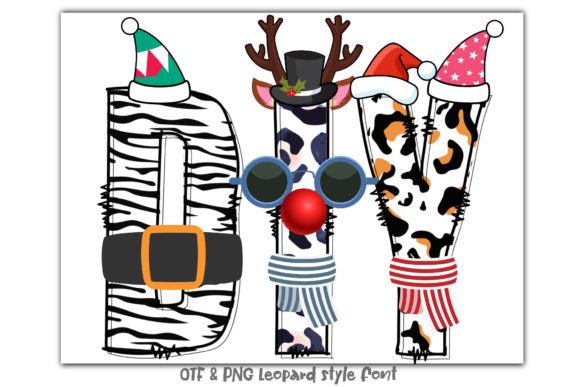
When I opened Happy Leopard for the first time, I smiled—not because it’s “cute,” but because it feels genuinely joyful. It’s a color font built around leopard print motifs woven into letterforms, layered with subtle Christmas elements: tiny holly sprigs tucked into curves, snowflakes dotting descenders, and playful swirls that mimic ribbon or tinsel. This isn’t just festive typography—it’s a personality. It leans into authenticity without trying too hard, balancing boldness and softness in a way that reads well at both 3” and 6” heights. For embroidery designers, that duality matters: it suggests flexibility across product types, from baby onesies to boutique tote bags.
A Real-World Test: Embroidering a Holiday Tote for a Local Kids’ Boutique
Last week, I prepped Happy Leopard for a custom embroidered cotton canvas tote—meant for a small shop’s holiday pop-up. The bag was unbleached natural linen-blend, medium weight, with visible weave texture. I chose “HO HO HO” as the phrase (a nod to the design’s playful spirit), sized to fit comfortably in a 5” x 7” hoop. Right away, I noticed how the leopard-inspired contours of the letters held up: the fill stitches didn’t bleed into the fabric grain, and the satin-stitched outlines gave crisp definition without overloading stitch density. The Christmas accents stayed legible—not fussy, not lost. Customers loved the tactile warmth of it: the leopard motif felt like a wink, the holiday touch felt sincere, not commercial.
Where Happy Leopard Shines in Embroidery
- Custom apparel: Works beautifully on sweatshirts and structured tees—especially where contrast matters (e.g., white thread on navy fleece). The rounded shapes soften harsh fabric edges.
- Baby and nursery items: On organic cotton blankets or pillow covers, its gentle scale and friendly rhythm avoid looking cartoonish or overwhelming.
- Holiday gifts and personalized products: As a monogram alternative or short phrase (“Joy,” “Merry,” “Peek-a-Boo”), it adds instant charm without needing extra embellishment.
- Embroidered patches and aprons: Holds detail well in 3–4” sizes—ideal for craft fair merchandise or Etsy listings where handmade presentation builds trust.
- Digital embroidery file use: As a color font, it invites thoughtful thread selection. I tested it in three palettes: classic red/green, warm neutrals (cream + charcoal), and high-contrast black/white—and each read clearly in printable mockups.
Where to Proceed Thoughtfully
Happy Leopard isn’t a one-size-fits-all embroidery file. Its charm lives in its details—so context is key:
- Small hoop sizes (under 4”): Avoid full phrases. Stick to single letters or abbreviations—some decorative flourishes shrink into ambiguity.
- Textured or stretchy fabrics: On terry cloth towels or ribbed knit caps, stabilize generously. The leopard patterning relies on clean stitch alignment; looseness blurs intent.
- Dark or heavily dyed fabrics: Test thread colors thoroughly. Some Christmas accents (like pale mint snowflakes) vanish on black unless you adjust thread hue or add underlay.
- Curved surfaces (caps, mugs, curved pillow seams): The letterforms are designed for flat application. Distortion happens easily—always test stitch on a scrap cap before committing.
- Frequent-wash items (baby clothes, kitchen towels): Keep stitch density moderate. Overly dense fills can stiffen fabric or encourage fraying over time.
What It Adds—Beyond Aesthetics
Using Happy Leopard isn’t just about visual appeal—it shifts how people experience your finished product. On an embroidered tea towel, it turns utility into delight. On a personalized gift, it signals care: the recipient feels seen, not stamped. For Etsy sellers and small shop owners, it elevates perceived value without raising production complexity. And crucially, it supports brand consistency—if your craft business centers on warmth, playfulness, and seasonal sincerity, this font reinforces that voice across digital embroidery files, social mockups, and physical goods.
Practical Designer Notes Before You Stitch
Before using Happy Leopard in any machine embroidery design—personal or commercial—here’s what I do every time:
- Test on scrap fabric matching your final project’s weight, weave, and stretch.
- Check thread color contrast in both daylight and indoor lighting—some leopard tones shift unexpectedly.
- Review stitch density: if it feels heavy for your fabric, simplify or reduce fill layers where possible.
- Confirm hoop size compatibility—don’t assume it fits your standard 4” x 4” unless verified.
- Inspect small details (like holly berries or snowflake points) at actual stitch-out size—not just on screen.
- Run black-and-white mockups alongside color versions to assess clarity for buyers who browse in grayscale thumbnails.
- Compare performance on light vs. dark backgrounds—especially important for digital product previews.
- Use appropriate stabilizer: cutaway for knits, tear-away for stable wovens, and fusible + tear-away for lightweight linens.
- Verify licensing terms—Happy Leopard is a color font intended for real project use, but confirm whether resale of finished embroidered items or redistribution of the digital embroidery file is permitted.
Final Thought: Not Just Another Holiday Font
Happy Leopard stands out because it doesn’t shout “Christmas!”—it hums it. It’s got rhythm, texture, and quiet confidence. For embroidery designers and creative entrepreneurs who choose every stitch with intention, it’s a rare blend: festive enough for December, authentic enough for year-round charm. Whether you’re stitching a one-of-a-kind baby blanket, prepping 50 tote bags for a craft fair, or building a cohesive line of holiday embroidery files for your Etsy shop, Happy Leopard earns its place—not as filler, but as finish.