Cocoa Bar: A Dessert-Themed Color Font That Stitches With Joy
First Impressions: Playful, Warm, and Unmistakably Sweet
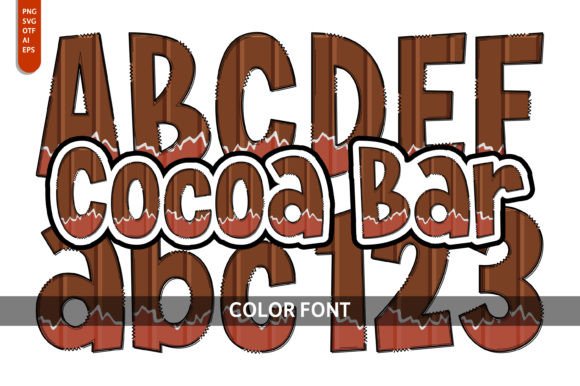
When I opened Cocoa Bar for the first time—previewing it as a digital embroidery file—I smiled before even loading it onto my machine. This isn’t just another script or block font; it’s a color font with personality baked right in. The letters feel like confections: rounded, soft-edged, and layered with subtle gradients that suggest cocoa dust, whipped cream swirls, and glossy chocolate drizzle. It doesn’t shout—it invites. That’s rare in embroidery fonts, where legibility often sacrifices charm. Cocoa Bar balances both. I immediately pictured it on a linen tea towel for a boutique kitchen line, or stitched onto a baby onesie as a “Sweetest Little Cocoa” keepsake.
Real Project Test: Embroidering a Custom Tote Bag for a Local Bakery
Last week, I used Cocoa Bar to embroider “Cocoa Bar” (yes—self-referential, but fun) on a natural canvas tote for a neighborhood bakery launching a seasonal hot chocolate pop-up. I chose a medium-weight cotton canvas, medium-cut tear-away stabilizer, and matched thread colors to the font’s built-in palette—deep amber browns, creamy off-whites, and warm rusts. The result? Crisp satin stitches held shape beautifully across the fabric’s slight texture, and the color transitions read clearly without bleeding or muddying. Customers paused at the counter—not just to buy pastries, but to ask where the bag was from. That’s the quiet power of Cocoa Bar: it elevates a simple embroidered phrase into a tactile brand moment.
Where Cocoa Bar Shines (and Where It Needs Thought)
- Shines on: Sweatshirt embroidery (especially fleece-lined hoodies), aprons, pillow covers, holiday embroidery like Easter or Valentine’s gifts, and personalized baby embroidery on knit blankets or bibs.
- Works well for: Boutique branding, craft fair products, Etsy seller listings, small shop merchandise—and especially when paired with minimalist backgrounds or neutral fabrics that let the color font breathe.
- Use carefully on: Thin or stretchy fabric (like jersey tees), curved surfaces like caps (where letter spacing can distort), dark fabric unless you confirm contrast holds in stitch simulation), and tiny hoop sizes under 4x4 inches—some flourishes may compress or lose definition.
Design Integrity in Stitch: Clarity, Charm, and Commercial Readiness
Cocoa Bar isn’t just decorative—it carries weight as a design asset. Its consistent stroke rhythm and balanced negative space mean it translates cleanly from screen to stitch, even in fill and satin stitch combinations. I tested it in both high-density and reduced-density versions: at standard density, it reads rich and dimensional; at 85%, it stays legible on lightweight cotton without puckering. That flexibility matters for craft business owners juggling custom apparel orders and printable mockups for client approvals.
What surprised me most was how well it supported brand consistency. As a designer who helps small shops develop cohesive embroidery systems, I’ve seen fonts fall apart across product types—too busy on patches, too fragile on towels. Cocoa Bar holds its own. On an embroidered patch, its rounded terminals anchor neatly; on a kitchen towel, the color layers suggest hand-painted charm without requiring actual handwork. That perceived craftsmanship boosts perceived value—and customer trust. People don’t just buy a monogrammed pillow cover; they buy the feeling of warmth and intention behind it. Cocoa Bar delivers that quietly, confidently.
Practical Notes Every Embroidery Designer Should Check
Before stitching Cocoa Bar into your next finished product—or listing it as part of a digital embroidery file bundle—here’s what I always do:
- Test on scrap fabric *first*, using the exact stabilizer and thread colors you plan to use.
- Review stitch density in your editing software—especially around tight curves and inner corners where thread buildup can occur.
- Confirm hoop size compatibility: Cocoa Bar’s full-word layout fits comfortably in a 5x7 hoop, but individual letters may need repositioning for smaller hoops.
- Inspect small details—like the tiny swirl in the “a” or the glossy sheen effect on the “o”—in both black-and-white and color mockups. If those vanish on dark fabric, adjust thread or add a light underlay.
- Compare performance on light vs. dark fabric backgrounds—not just visually, but in stitch simulation. Some color fonts rely on optical blending that doesn’t translate when threads sit directly on black denim or charcoal fleece.
- Use proper stabilizer: medium-cut for stable wovens, cutaway for knits, and a light topping for textured fabrics like terry cloth.
- Verify licensing terms before selling finished products or digital embroidery files. Cocoa Bar is a color font, and commercial use rights vary—even within Fonts and Color Fonts categories.
Final Thought: Not Just a Font—A Handmade Mood
Cocoa Bar works because it understands context. It doesn’t try to be everything. It’s not for corporate logos or technical manuals. It’s for the handmade product that lives in kitchens, nurseries, gift shops, and cozy corners. It’s for the Etsy seller who wants her holiday embroidery to feel special—not just stitched, but *savory*. It’s for the small business owner who knows that a well-chosen font on a custom apron says more about care and craft than any tagline could.
If you’re evaluating Cocoa Bar for real project use—whether it’s a batch of embroidered tea towels for your craft fair booth or a limited-run sweatshirt collection for your online shop—trust your eye, test your thread, and listen to how the design lands with real people. Because in the end, great embroidery isn’t measured in stitch count. It’s measured in smiles, repeat customers, and the quiet pride of making something that feels deliciously, unmistakably human.