Clover Leaf: A Versatile Color Fonts Asset for Digital Sellers
As someone who’s launched over 200 digital product listings across Etsy, Creative Market, and Shopify—mostly printable designs, Canva templates, and SVG bundles—I opened Clover Leaf expecting charm, not complexity. What I found was a refreshingly cohesive color font that balances decorative flair with commercial practicality. It doesn’t scream “trendy”—it whispers “thoughtful,” and that’s exactly what makes it valuable for serious sellers.
First Impression: Whimsical but Grounded
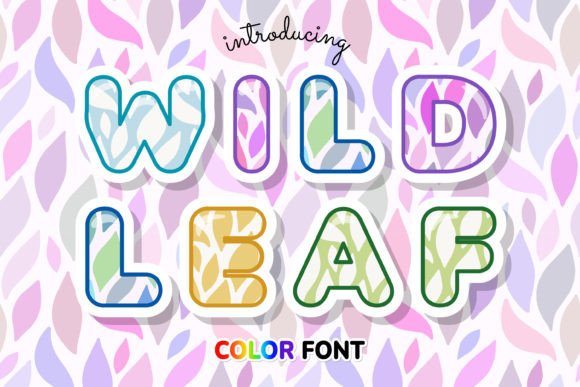
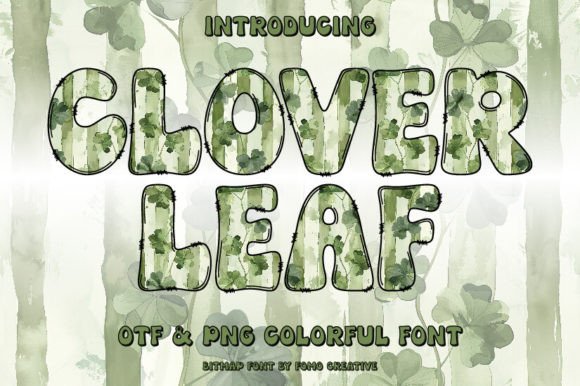
Clover Leaf lands somewhere between botanical elegance and friendly handmade charm. Its glyphs feature soft green gradients, subtle leaf-shaped accents, and gentle texture overlays—not heavy illustration, but intentional color layering. It feels feminine without being cutesy, seasonal without locking you into spring alone, and decorative without sacrificing legibility at medium sizes. Think wedding invitations, nursery wall art, eco-branded planners, or small-batch soap labels—not tech bro merch or minimalist corporate decks.
Where Clover Leaf Fits Real Product Workflows
This isn’t just a novelty font to drop into a mockup and call it done. Clover Leaf works best when treated as a *graphic design asset*—a visual element with built-in personality, not just text. Here’s how it translates across common digital product categories:
- SVG designs & Cricut projects: Use the outlined letters as standalone cut files—especially effective for monogrammed tote bags, wooden sign kits, or layered vinyl decals. Test cut quality on your machine first; some gradient edges soften slightly in raster preview but hold clean lines in vector export.
- PNG design & clipart: Export individual glyphs as transparent PNGs (300 DPI) for planner stickers, greeting card embellishments, or social media graphics. The soft gradients add depth without overwhelming small-scale use.
- Printable design & sublimation design: Works beautifully on light cotton tees, ceramic mugs, and sublimation tumblers—especially when paired with neutral backgrounds. Avoid ultra-dense text blocks; stick to short phrases like “Grow Wild” or “Hello Spring.”
- Canva template & digital download: Embed as editable text layers in Canva (via uploaded font or PNG fallback). Buyers love swapping names or dates while keeping the signature look intact. Just remind them in instructions that color fonts require Canva Pro for full editing.
- Design bundle & seasonal collection: Bundle Clover Leaf with coordinating hand-drawn florals, kraft paper textures, and a clean sans-serif pairing font. That combo sells consistently in March–May and again for baby shower collections.
Boosting Product Presentation—Without Extra Effort
One of Clover Leaf’s quiet strengths is its impact on listing psychology. On Etsy, where thumbnails are tiny and attention spans shorter than ever, this font delivers instant visual hierarchy. Its color layering catches the eye faster than flat black text—even at 80px width. In product mockups, it adds perceived value: a “hand-lettered” feel without hiring an illustrator. And because the colors are embedded in the glyph itself, you avoid mismatched Pantones or CMYK surprises in print-on-demand previews.
For brand consistency across a shop, Clover Leaf serves as a subtle anchor—think header text in a blog graphic, title treatment in a Canva planner, and accent lettering on a sticker sheet. That repetition builds recognition, especially for handmade business owners building small business branding over time.
Where to Proceed With Care
Like any expressive design asset, Clover Leaf has boundaries. It’s not ideal for:
- Tiny sticker details under 12pt—gradients blur, and fine leaf shapes lose definition.
- Text-heavy templates (e.g., multi-page workbooks), where readability trumps decoration.
- Dark background applications without testing contrast—some green tones fade against charcoal or navy unless manually adjusted.
- Cricut or Silhouette projects requiring crisp, single-line cutting paths. The layered color structure means you’ll need to outline and simplify before sending to cut.
- Low-resolution print products (like cheap party favor tags)—the subtlety gets lost in dot patterns.
Practical Seller Notes Before You List
Before uploading your next Etsy product or print-on-demand design, run these quick checks:
- Preview Clover Leaf in actual thumbnail size—does the shape read clearly?
- Test it on both white and dark mockup backgrounds. Adjust brightness or add subtle stroke if needed.
- Export PNGs at 300 DPI and verify transparency holds (no gray fringing).
- If offering SVG files, open them in Inkscape or Illustrator—check for stray nodes or overlapping paths that could confuse cutting software.
- Confirm the commercial license explicitly permits finished goods (most do, but always re-read the terms—especially for resale on Redbubble or Printful).
- Organize customer files clearly: “CloverLeaf_OTF”, “CloverLeaf_PNGs”, “CloverLeaf_SVG_Layers” — no one wants to hunt.
- Pair intentionally: try it with a warm serif (like Cormorant Garamond) for elegance, a friendly sans (Poppins) for balance, or a delicate script (Quicksand) for contrast.
Final Thought: A Strategic Design Asset, Not Just a Font
Clover Leaf isn’t about replacing your core type system—it’s about having a reliable, licensable, visually distinctive tool for moments that need warmth, intention, and quiet sophistication. As a color font, it delivers more than single-tone typography: it brings built-in texture, mood, and cohesion to digital downloads, printable design, and commercial design alike. Used thoughtfully—not as filler, but as a considered element—it helps your shop stand out in crowded creative marketplaces, builds trust through consistent visual storytelling, and quietly elevates perceived value. For sellers building long-term brands—not just one-off listings—that’s worth more than a thousand generic fonts.